
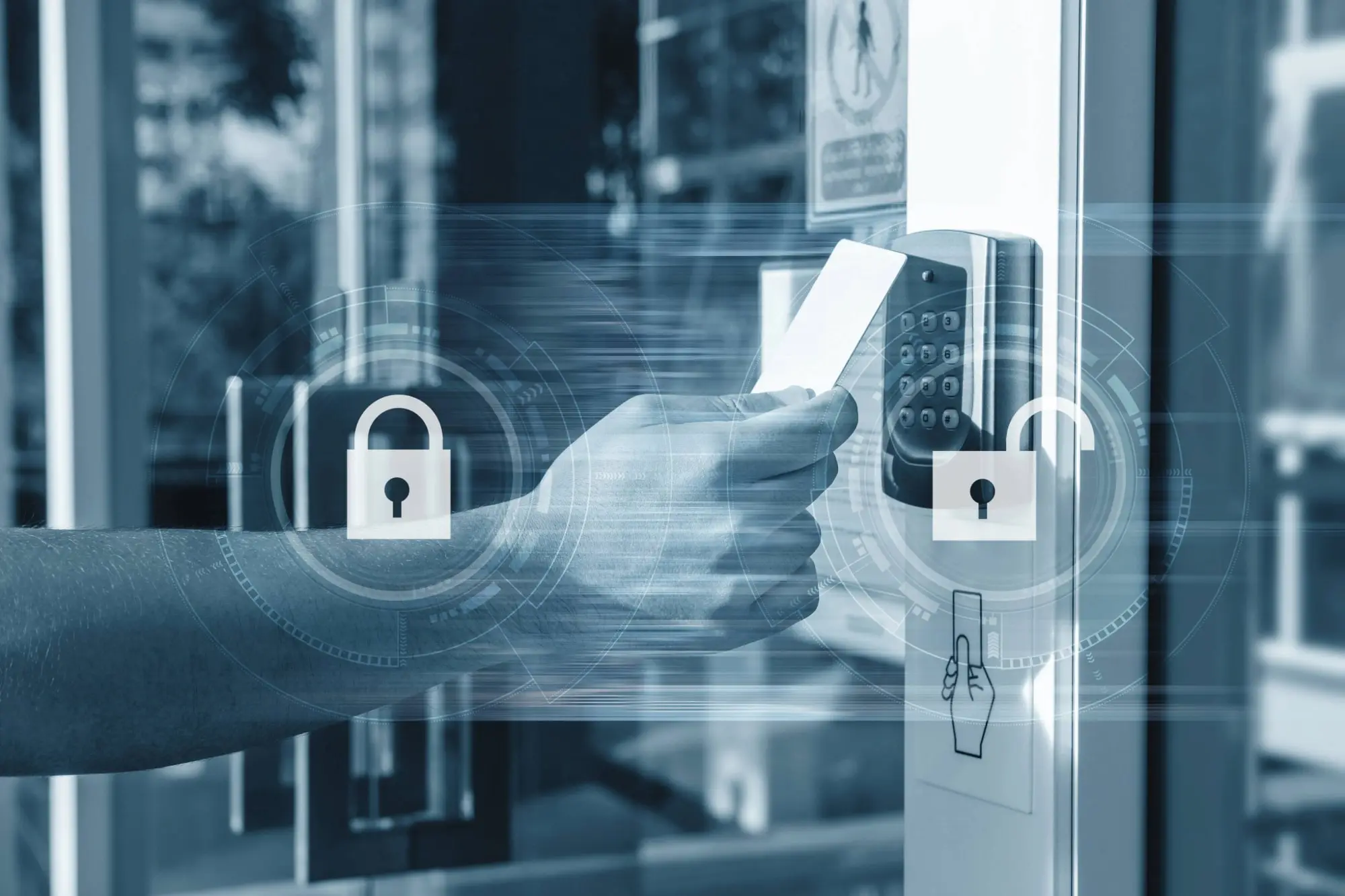

Access Control Systems: Design, Installation, and Support
Access control systems manage who can enter a building, where they can go, and when access is permitted. They replace traditional keys with controlled, trackable access based on credentials, permissions, and system rules.
Andrew Casey Integration provides access control system design, installation, and support for commercial, industrial, and institutional facilities in Dayton, Cincinnati, Columbus, Toledo, and surrounding areas. Systems are developed around building layout, security requirements, and operational workflow so access is controlled, monitored, and adaptable.
How Access Control Systems Work
Access control systems are built around credential-based entry and centralized control.
- A user presents a credential (card, fob, mobile device, or biometric)
- A reader sends the credential data to the control system
- The system verifies permissions based on user role, schedule, and assigned access levels
- If authorized, the system unlocks the door or access point
- All activity is recorded for monitoring and audit
Access can be managed in real time, allowing administrators to add, remove, or modify permissions as needed.
System Components and Features
Access control systems are made up of coordinated components that manage entry and security:
Credentials and Readers
- Keycards, fobs, mobile credentials
- Biometric readers where required
- Keypad entry systems
Control Equipment
- Door controllers and access panels
- Centralized or distributed system architecture
- Secure communication between devices
Door Hardware
- Electric strikes and magnetic locks
- Door position switches and request-to-exit devices
- Integration with existing door infrastructure
Access Management
- Role-based permissions
- Scheduled access times
- Multi-door and multi-location control
- Audit trails and activity logs
Each component is configured to match how the facility operates and how access needs to be controlled.
System Integration
Access control systems often integrate with other building and security systems to provide a complete solution.
Integration may include:
- Video surveillance systems for visual verification
- Intercom and entry systems for controlled access points
- Intrusion and alarm systems
- Elevator access control
- Door monitoring and alarm conditions
These integrations allow facilities to manage security from a unified system.
Installation and System Configuration
Installation involves deploying hardware, wiring, and system components so that access points operate reliably and securely.
System configuration includes:
- User roles and permission levels
- Access schedules and time restrictions
- Door behavior and lock control
- Alarm conditions and notifications
- Integration with other systems
A properly configured system ensures consistent operation and simplifies management.
Maintenance and Ongoing Support
Access control systems require ongoing service to maintain performance and security.
Maintenance may include:
- System testing and verification
- Hardware inspection and replacement
- Software and firmware updates
- Database and credential management
- Expansion for new doors or facilities
Regular maintenance supports system reliability and long-term usability.
Applications
Access control systems are used across a range of environments:
- Office buildings
- Healthcare facilities
- Educational institutions
- Industrial and manufacturing facilities
- Multi-tenant commercial buildings
Each environment requires different access rules, security levels, and system configurations.
Why Choose Andrew Casey Integration
Andrew Casey Integration approaches access control as an operational system, not just installed hardware. System design, installation, and support are aligned with how facilities manage access, security, and daily operations.
The focus is on controlled access, reliable system performance, and long-term serviceability so the system continues to function as intended as the facility evolves.
Access Control FAQ
What is an access control system?
An access control system manages entry to a building or secured area using credentials such as keycards, fobs, mobile devices, or biometrics. It allows administrators to control and monitor who has access and when.
Can access control systems replace traditional keys?
Yes. Access control systems eliminate the need for physical keys by using programmable credentials. Access can be changed or revoked without replacing locks.
Can access control systems be managed remotely?
Many systems allow remote management, enabling administrators to update permissions, monitor activity, and respond to security events from a central location.
Do access control systems keep records of activity?
Yes. Most systems maintain audit trails that log entry attempts, successful access events, and system activity for review and security purposes.
Can access control be integrated with cameras or alarms?
Yes. Access control systems can be integrated with video surveillance, intercoms, and alarm systems to provide a more complete security solution.
When should an access control system be upgraded?
Upgrades are typically needed when systems become outdated, cannot support new access points, lack modern credential options, or no longer meet the security needs of the facility.
Expert Technicians
Certified experts ensure precise installation and maintenance of your access control system.
Transparent Pricing
Clear, upfront costs with no hidden fees for easy budgeting.
Emergency Services
Quick, expert response to minimize downtime and restore access control operations.
Project Management
Flawless execution and timely delivery of your access control solutions.
Top-Quality Products
High-quality components for exceptional durability and performance.
Service First
Committed to excellence with cutting-edge solutions and exceptional support.